FAV0220-25
3-Channel Networked AC Voltage Detector
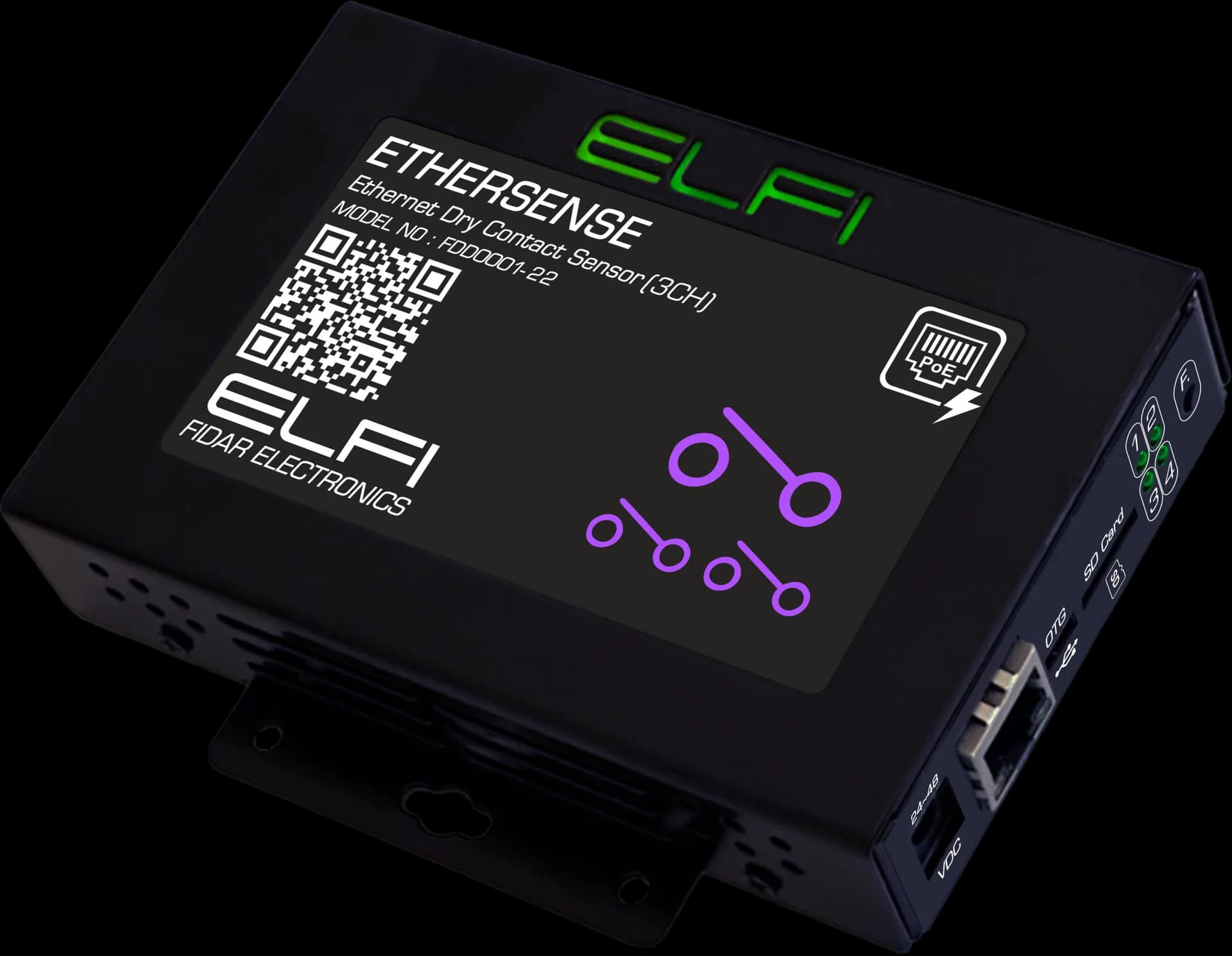
The 3-Channel Networked AC Voltage Detector from Fidar Electronics reports whether an AC line up to 220 V is live and timestamps every loss and restore. It runs standalone on its own IP address with a built-in web page.
 Detects AC voltage presence up to 220 V
 Three independent input channels in one unit
 Immediate power-failure alert with a timestamp
 A definite two-state answer, no value to interpret
 Own IP address and built-in web page
 Powered by PoE or a 48 V adapter
 DHCP or a static IP address
 SNMP monitoring in PRTG and SolarWinds
An AC voltage detector reports whether a line is live. Unlike a level sensor that returns a number, it gives a definite two-state answer, which is exactly what the job needs: mains-failure alerts, proving a transfer to generator or UPS, and confirming that critical circuits are energised. Every transition is timestamped, so the outage duration stays in the record instead of relying on someone's memory.
Key features
Detects AC voltage presence up to 220 V
Three independent input channels in one unit
Immediate power-failure alert with a timestamp
A definite two-state answer, no value to interpret
Own IP address and built-in web page
Powered by PoE or a 48 V adapter
DHCP or a static IP address
SNMP monitoring in PRTG and SolarWinds
Connectivity
Own IP, built-in web page, HTTP/HTTPS
PoE or 48 V adapter over a single network cable
SNMP output for PRTG, Zabbix and SolarWinds
Where it is used
Mains-failure alerts at remote sites and stations
Proving load transfer to a generator or UPS
Confirming critical circuits and emergency lighting are live
Feeder status on a distribution board
Telecom sites, BTS towers and equipment rooms
Logging outage count and duration for maintenance reports
Installation
Wire the input in parallel with the monitored line; installation must be carried out by a qualified electrician under low-voltage safety rules.
| Dimensions | Height 3 cm, Depth 14 cm, Width 10.5 cm |
|---|---|
| Weight | 0.5 kg |
| Operating temperature | -10 to 80 °C |
| Storage temperature | -20 to 80 °C |
| Operating humidity | 0 to 60%, non-condensing |
| Warranty | 2 years |
| Mount | 2 Wall-mount holes |
| Input | 0 to 220v AC |
| Number of Inputs | 3 inputs |
| Output | Network |
An AC voltage detector reports whether a line is live. Unlike a level sensor that returns a number, it gives a definite two-state answer, which is exactly what the job needs: mains-failure alerts, proving a transfer to generator or UPS, and confirming that critical circuits are energised. Every transition is timestamped, so the outage duration stays in the record instead of relying on someone's memory. This is an EtherSense model and runs standalone: it takes its own IP address, serves its own web page in a browser, and needs no data logger or middleware to commission. A PoE switch or a 48 V adapter powers it, so one network cable carries both data and power. For professional monitoring its SNMP output drops straight into PRTG, Zabbix or SolarWinds. Typical applications: • Mains-failure alerts at remote sites and stations • Proving load transfer to a generator or UPS • Confirming critical circuits and emergency lighting are live • Feeder status on a distribution board • Telecom sites, BTS towers and equipment rooms • Logging outage count and duration for maintenance reports
FAV0220-25-Usermanual-EN
v1.0 · EN · 1352 KB