
Concrete curing monitoring
Logs in-place concrete and ambient temperature from the moment of the pour, so formwork stripping is decided by real concrete maturity rather than by the calendar.

Why this monitoring is needed
When to strip the formwork is usually decided by habit: "three days". But concrete cures with temperature, not with the clock. In cold weather three days may not be enough, and stripping early permanently reduces the structure's final strength. In hot weather the same mix may reach the required strength in a day, and waiting three is three days of needless delay.
The other risk is the core-to-surface differential in mass pours. Heat of hydration warms the centre of the section while the surface stays cool against the air; too large a gap creates thermal cracking that shows up years later but formed on day one.
What gets measured
Concrete core temperature
A PT100 embedded before the pour, delivering the hydration curve.
Surface temperature and core differential
The core-to-surface difference is the primary thermal-cracking risk index in mass concrete.
Ambient temperature and humidity
Ambient conditions set both the curing rate and the surface evaporation rate.
Concrete maturity
Computed from the time-temperature integral and the defensible basis for the stripping decision.
Fresh concrete temperature at the plant
Delivery temperature is the starting point of the whole curve and needs recording.
Recommended equipment
Every model below is from the Fidar Electronics range. The final combination is set after a site survey or an engineering consultation.
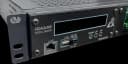
FCD6455-01
FIDAQUIRE FCD6455-01 Industrial Data Logger
Site logger with continuous recording and reporting for the technical office
View product ←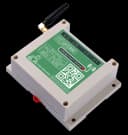
FWN0260-01
FWN0260-01 GSM Communication Modem (Dual SIM)
GSM modem for a site with no fixed network
View product ←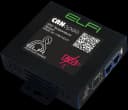
FTR0100-01
PT100 Temperature Sensor
PT100 embedded in the section for core temperature
View product ←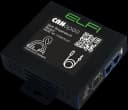
FTD3070-01
Spot Temperature Sensor
Spot temperature sensor for the concrete surface and formwork
View product ←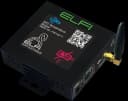
FTR0100-11
Wireless PT100 Temperature Sensor
Wireless PT100 for points far from the site panel
View product ←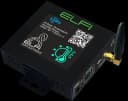
FTA3070-11
Wireless Temperature and Humidity Sensor
Wireless temperature and humidity sensor for site ambient conditions
View product ←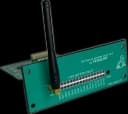
FWL1600-01
FWL1600-01 LoRa Wireless Card (16 Nodes)
LoRa receiver card covering scattered points across the site
View product ←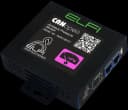
FMP0180-01
Ambient Pressure Sensor
Ambient pressure sensor completing the weather record
View product ←Alarm and automation rules
- 1
Maturity index reaching its target: formwork stripping cleared, with the supporting curve reported.
- 2
Core-to-surface differential beyond the allowed limit: thermal-cracking alarm and a call to insulate the surface.
- 3
Core temperature above the mix design limit: alarm — excessive heat lowers ultimate strength.
- 4
Ambient below freezing in the early hours: critical alarm for protective action.
- 5
Automatic full curing report per pour for the project's technical file.
What the operator gets
Stripping time shortens on the basis of data, speeding the structural cycle.
Thermal-cracking risk in mass pours is managed.
Every pour has a curing record that stands up in claims and technical audits.
Frequently asked questions
Can an embedded sensor be recovered afterwards?
The PT100 is placed with enough cable that the tail stays outside the section; the element remains in the concrete and the cable is cut once the monitoring period ends. Placement is coordinated with the project's technical office so it does not clash with the reinforcement.
Does the maturity index replace laboratory cylinders?
It complements them. Laboratory cylinders remain the formal strength reference, but they cure in laboratory conditions rather than in the structure. The maturity index measures the actual curing of that section, and is typically used alongside witness cylinders for the stripping decision.
Related solutions
Want this solution on your own site?
Send us the site details and we will put together the equipment list and a technical proposal to match.