
Excavation and shoring vibration monitoring
Monitors vibration from demolition and excavation, shoring movement and neighbouring-building conditions, managing both collapse risk and damage claims.

Why this monitoring is needed
Urban excavation carries two simultaneous risks: shoring collapse and a neighbour's damage claim. The second arises even when the excavation was executed correctly — and without data, proving that the neighbour's wall crack pre-existed is practically impossible.
Collapse is not without warning either. Shoring moves before it fails, and that gradual movement is the only window for intervention. The problem is that the movement is invisible to the eye; it has to be measured.
What gets measured
Demolition and excavation vibration
Shock sensors at the excavation boundary and on the party wall log the vibration reaching the neighbouring building.
Shoring displacement
A 4–20 mA displacement transmitter on the anchors; the movement trend matters more than any single reading.
Anchor and strut load
A 4–20 mA anchor load cell exposes an abnormal loss or gain of load.
Groundwater level
A rising water table changes the pressure on the shoring and needs monitoring.
Weather and rainfall
Heavy rain both raises the water table and reduces slope stability.
Recommended equipment
Every model below is from the Fidar Electronics range. The final combination is set after a site survey or an engineering consultation.
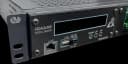
FCD6455-01
FIDAQUIRE FCD6455-01 Industrial Data Logger
Site logger with continuous recording and reports that stand up in a claim
View product ←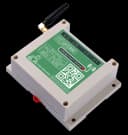
FWN0260-01
FWN0260-01 GSM Communication Modem (Dual SIM)
GSM modem carrying alarms and data off site
View product ←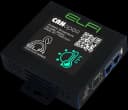
FDS0202-01
Shock Detection Sensor
Shock detection sensor for boundary vibration
View product ←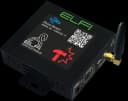
FDS0202-11
Wireless Shock Detection Sensor
Wireless shock sensor for mounting on the neighbouring building with no cabling
View product ←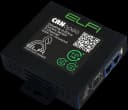
FAC0420-02
3-Channel 4–20 mA Current Sensor
3-channel 4–20 mA input for displacement, load cell and water level
View product ←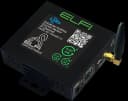
FAC0420-12
Wireless 3-Channel 4–20 mA Current Sensor
Wireless 4–20 mA input for far boundary points
View product ←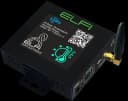
FTA3070-11
Wireless Temperature and Humidity Sensor
Wireless temperature and humidity sensor for site weather
View product ←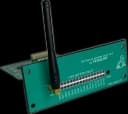
FWL1600-01
FWL1600-01 LoRa Wireless Card (16 Nodes)
LoRa receiver card covering the excavation perimeter with no cabling
View product ←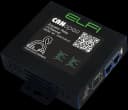
FDR0102-01
2-Channel Relay Module
Relay module for the excavation evacuation siren
View product ←Alarm and automation rules
- 1
Vibration at the neighbouring building above the permitted limit: operations stopped and the event timestamped.
- 2
Shoring displacement beyond design, or an accelerating trend: critical alarm and excavation evacuation.
- 3
Sudden loss of anchor load: slack-anchor alarm and immediate inspection.
- 4
Groundwater above threshold: alarm that pressure on the shoring is rising.
- 5
Automatic daily report of peak recorded vibration, as evidence against damage claims.
What the operator gets
Shoring movement becomes visible, creating the window to intervene before failure.
A neighbour's damage claim is answered with independent continuous data.
The works programme is set against data rather than blanket conservative limits.
Frequently asked questions
Is your shock sensor a standard structural vibration monitor?
Fidar's shock sensor detects impact and vibration events and is very effective for alarming and event logging. Where the project requires peak particle velocity to a specific standard — for formal acceptance by the client, say — a calibrated standard vibration monitor is needed, and Fidar's system reads its output as an analogue input and files it in the same history.
Do you supply the displacement transmitter and load cell?
Both come from a geotechnical instrumentation specialist and their selection belongs to the project's geotechnical engineer. Fidar's system reads their standard 4–20 mA or 0–10 V output, logs it continuously and turns it into alarms — which is the part usually missing on these projects.
Related solutions
Want this solution on your own site?
Send us the site details and we will put together the equipment list and a technical proposal to match.