
Blood bank and lab refrigerator monitoring
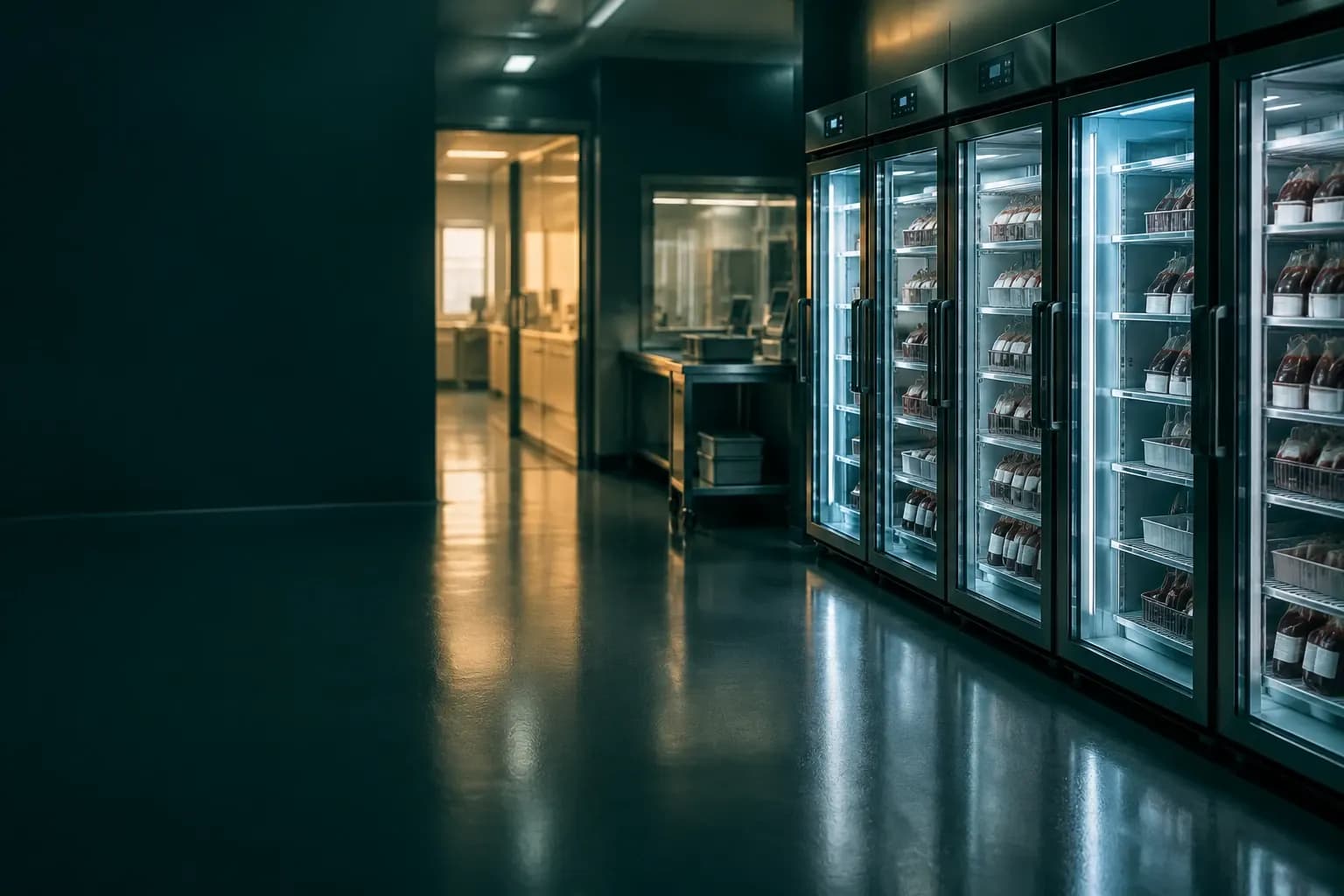
Continuously records blood bank refrigerator, plasma freezer and laboratory fridge temperature, reporting a deviation before the product has to be discarded.
Why this monitoring is needed
A unit of blood is stored between 2 and 6 °C, and leaving that band even briefly makes it unusable. The problem is that a failing refrigerator gives no outward sign; the dial on the door shows a number, and nobody is there at three in the morning to read it.
The second dimension is documentation. A blood bank inspector wants a continuous temperature record, not a manual entry three times a day. A handwritten sheet shows no overnight excursion and does not stand as reliable evidence in an audit.
What gets measured
Internal temperature of each fridge and freezer
A PT100 inside the chamber, in a buffer solution so a momentary door opening does not create a false alarm.
Door opening
Every opening is logged with time and duration; a temperature excursion cannot be explained without it.
Compressor operation
Compressor current exposes a refrigeration fault before internal temperature has risen.
Incoming power and UPS
A power cut is the most common cause of an excursion and must be reported independently of the fridge itself.
Storage room temperature and humidity
A hot room stresses every fridge at once; that common cause has to be visible.
Recommended equipment
Every model below is from the Fidar Electronics range. The final combination is set after a site survey or an engineering consultation.
FCD6455-01
FIDAQUIRE FCD6455-01 Industrial Data Logger
Central logger with continuous reporting and access levels for audit
View product ←
FBC0232-01
FBC0232-01 CANopen Input Card
CANopen card connecting dozens of units on one cable
View product ←
FTR0100-01
PT100 Temperature Sensor
PT100 sensor inside each fridge and freezer
View product ←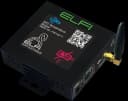
FTR0100-11
Wireless PT100 Temperature Sensor
Wireless PT100 for units that cannot be cabled
View product ←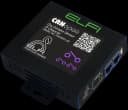
FDD0001-02
3-Channel Dry Contact Detector
3-channel dry-contact detector for doors and the unit's own alarm output
View product ←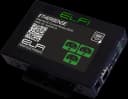
FAC2000-23
3-Channel Networked AC Current Sensor
3-channel AC current sensor for the compressors
View product ←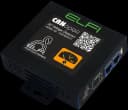
FDV0220-01
AC Voltage Detector
AC voltage detector for the incoming supply
View product ←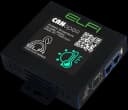
FTA3070-01
Temperature and Humidity Sensor
Storage room temperature and humidity sensor
View product ←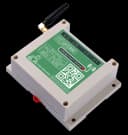
FWN0260-01
FWN0260-01 GSM Communication Modem (Dual SIM)
GSM modem to deliver alarms during a power or network outage
View product ←Alarm and automation rules
- 1
Internal temperature out of the product band beyond the permitted duration: immediate SMS to the responsible officer and the on-call staff.
- 2
Temperature rising with the door shut: unit-failure alarm, ranked above a door alarm.
- 3
Compressor current lost for longer than a normal defrost: alarm before internal temperature moves noticeably.
- 4
Power loss: immediate GSM alarm, independent of building power and network.
- 5
Automatic daily and monthly XLS reports for the audit file.
What the operator gets
Discarding blood products because of an undetected excursion is eliminated.
A continuous record replaces the handwritten sheet, making the audit defensible.
A failing unit is replaced before it reaches the critical stage.
Frequently asked questions
Why put the sensor in a buffer solution?
Because the air inside a fridge warms within seconds of the door opening while the product itself barely moves. A sensor in buffer solution imitates the product's thermal behaviour. Without it the system produces dozens of false alarms a day and staff learn to ignore alarms — the worst possible outcome.
Our fridges have their own alarms — is this still needed?
An internal alarm only sounds locally and is useless at an hour when nobody is there; and if the unit's own control board fails, its alarm fails with it. An independent system both gets the alarm out and builds an auditable history. The unit's own alarm output is also brought in as a dry-contact channel.
Related solutions
Want this solution on your own site?
Send us the site details and we will put together the equipment list and a technical proposal to match.