
Smart control for mosques, schools and public buildings
Controls heating, cooling and lighting in mosques, schools and government offices against the real occupancy schedule, and removes the energy spent on empty hours.
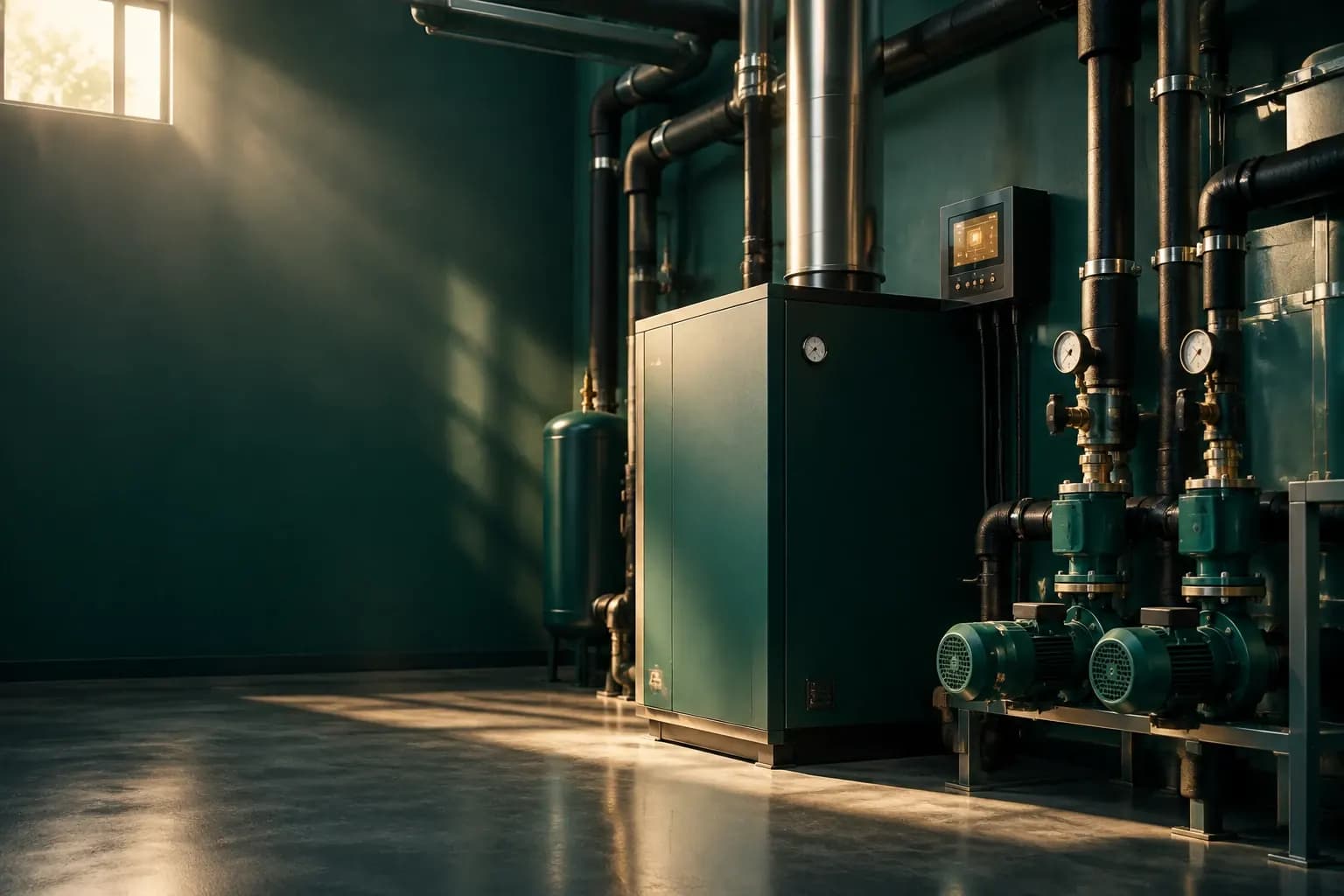
Why this monitoring is needed
A public building has a very clear occupancy pattern: a mosque at prayer times, a school in class hours, an office in office hours. Yet boilers and coolers usually run all day, because nobody is there to switch them off each time. The biggest saving in these buildings is not new equipment — it is turning the existing equipment off at the right moment.
The second issue is the absent technician. A school or mosque has no facilities operator, and a boiler or pump failure is discovered only once the building goes cold. A controller with SMS alerts fills the role of the operator who is not there.
What gets measured
Temperature of the main spaces
The prayer hall, classroom or open-plan floor is covered by a temperature and humidity sensor so control follows the real space temperature, not the plant room.
Plant room flow and return temperature
The flow-return differential shows boiler efficiency and whether water is actually circulating.
Pump and burner operation
Motor current and the burner's dry contact prove what is actually running.
Lighting and electrical consumption
Current on the lighting circuits shows whether lamps stayed on through empty hours.
Schedule and occupancy
A weekly schedule and holiday calendar in the controller drive automatic start and stop.
Recommended equipment
Every model below is from the Fidar Electronics range. The final combination is set after a site survey or an engineering consultation.
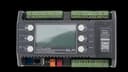
FCM3268-01
FCM3268-01 Smart Powerhouse Controller (GSM)
Smart powerhouse controller with a weekly schedule and holiday calendar; control and alarms over the mobile line, with no dependence on the building's cabling

FTA3070-01
Temperature and Humidity Sensor
Temperature and humidity sensor for the main spaces
View product ←
FTD3070-01
Spot Temperature Sensor
Spot temperature sensor for heating flow and return
View product ←
FAC2000-23
3-Channel Networked AC Current Sensor
3-channel AC current sensor for pump, burner and lighting
View product ←
FDD0001-01
Dry Contact Detector
Dry-contact detector for burner status and the emergency switch
View product ←
FDR0508-01
FDR0508-01 8-Channel Relay Output Card
8-channel relay card commanding pumps, burner, coolers and lighting circuits
View product ←
FDW0050-01
Water Leak Sensor
Water-leak sensor in the plant room
View product ←Alarm and automation rules
- 1
Heating started ahead of the schedule so the space reaches setpoint at the moment people arrive.
- 2
Automatic shutdown of every circuit at the end of the schedule and on calendar holidays.
- 3
Space temperature overshooting setpoint: heating command reduced and the waste logged.
- 4
Pump current lost while the burner is firing: immediate alarm — the boiler is at risk of boiling dry.
- 5
Non-zero lighting current outside occupied hours: alarm and automatic switch-off.
What the operator gets
Fuel and power burned in empty hours — the largest waste in these buildings — is removed.
A building with no technician still gets its fault alarms on the responsible person's phone.
Consumption reports let an organisation compare its buildings against each other.
Frequently asked questions
A mosque's usage hours shift with the lunar calendar — how is that handled?
The schedule is editable and several schedules can be defined and switched between; on the GSM version the change can be made by SMS. More importantly the pre-heat works from the real space temperature, so a shift of a few minutes does not affect comfort.
What about a school district with several buildings?
Each building has its own controller and all of them appear on one central dashboard. That is what makes building-to-building comparison possible — usually one or two buildings consume far more than the rest, and those are where the work should start.
Related solutions
Want this solution on your own site?
Send us the site details and we will put together the equipment list and a technical proposal to match.