
Elevator condition monitoring
Logs elevator machine-room temperature, motor current, trip counts and emergency-stop events so a fault is found before a passenger is trapped.

Why this monitoring is needed
The lift is the one piece of building equipment whose failure can trap a person, and it is also the one nobody keeps data on. The service engineer visits monthly, looks and leaves; whatever changed between two visits has left no trace.
Machine-room temperature is the number-one shutdown cause on modern lifts. The variable-frequency drive trips its own thermal protection and the lift goes out of service — almost always on the hottest days of the year, with no prior warning.
What gets measured
Machine room and drive temperature
Room and drive-body temperature are read separately; the drive reaches its trip point before the room does.
Traction motor current
Each trip has a repeatable current signature; a slow change in it points to bearing wear, brake slip or an unbalanced counterweight.
Trip count and running hours
Counting trips from a control-panel dry contact gives the real basis for the maintenance plan, rather than elapsed months.
Emergency stop and panel faults
Panel alarm outputs are read as dry contacts and timestamped.
Incoming power and emergency lighting
Power loss is the leading cause of entrapment; an AC voltage detector announces the moment it happens.
Recommended equipment
Every model below is from the Fidar Electronics range. The final combination is set after a site survey or an engineering consultation.
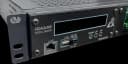
FCD6455-01
FIDAQUIRE FCD6455-01 Industrial Data Logger
Machine-room logger with event recording and SMS alerts to the service contractor
View product ←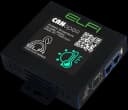
FTA3070-01
Temperature and Humidity Sensor
Machine-room temperature and humidity sensor
View product ←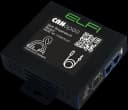
FTD3070-01
Spot Temperature Sensor
Spot temperature sensor on the drive and motor body
View product ←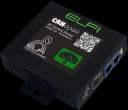
FAC2000-01
AC Current Sensor
AC current sensor for the traction motor
View product ←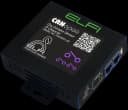
FDD0001-02
3-Channel Dry Contact Detector
3-channel dry-contact detector for trip count, emergency stop and panel fault
View product ←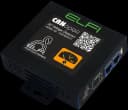
FDV0220-01
AC Voltage Detector
AC voltage detector for the incoming supply
View product ←
FDS0202-01
Shock Detection Sensor
Shock sensor recording abnormal car impact and vibration
View product ←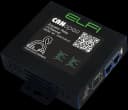
FDR0102-01
2-Channel Relay Module
Relay module driving machine-room ventilation
View product ←Alarm and automation rules
- 1
Machine room above 35 °C: ventilation fan switched on by relay. Above 40 °C: alarm before the drive reaches its trip point.
- 2
A trip's current signature deviating from the reference: predictive-maintenance alarm.
- 3
Emergency stop activated: immediate SMS with the exact time for follow-up.
- 4
Power loss during occupied hours: high-priority possible-entrapment alarm.
- 5
Trip counter reaching the service interval: maintenance reminder based on real usage.
What the operator gets
Summer lift shutdowns disappear once the machine room is ventilated in time.
Maintenance moves from calendar-based to usage-based, removing unnecessary service cost.
Every entrapment event is documented with an exact time, making the answer to residents definitive.
Frequently asked questions
Does this system interfere with the lift safety circuit?
No, and it must not. The system only reads: dry contacts from the panel's alarm outputs, current through a split-core CT, temperature with an independent sensor. The lift's safety circuit stays untouched, and any connection to the panel is made with the maintenance contractor.
How do you handle several lifts in one building?
One logger can cover several lifts. Sensors daisy-chain on the CANopen bus and each FBC0232-01 card reads up to 64 of them, so adding a second and third lift is a tap on the existing cable rather than a new system.
Related solutions
Want this solution on your own site?
Send us the site details and we will put together the equipment list and a technical proposal to match.