
Parking garage and jet fan monitoring
Monitors parking-garage air quality, jet fan and exhaust fan operation and ventilation panel power, so ventilation runs on measured pollution rather than on a timer.
Why this monitoring is needed
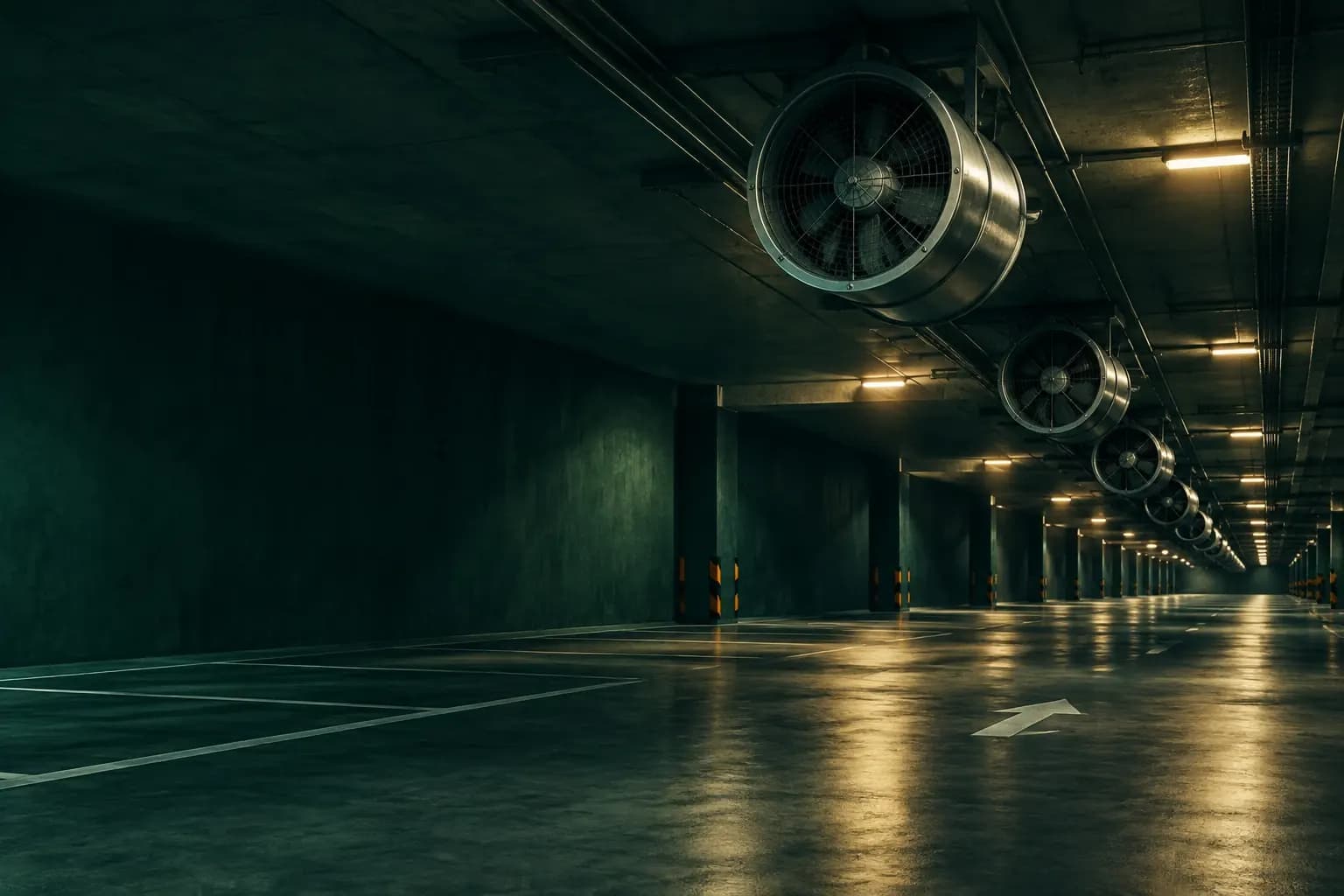
Underground car-park ventilation is usually wrong in one of two ways: either it runs all day burning power, or it runs on a timer that bears no relation to actual traffic. The second is the dangerous one, because it under-delivers exactly at the busy hour.
Jet fans have their own problem: one failed fan mid-run breaks the airflow pattern and leaves a zone of the garage effectively unventilated. From outside there is no sign of it — only the motor current gives it away.
What gets measured
CO and pollutant concentration
4–20 mA CO detectors at several points in the garage form the basis of the ventilation command.
Dust and airborne particulate
The dust sensor reads PM1, PM2.5 and PM10; in garages with diesel traffic that matters more than CO.
Per-fan operation
Each motor's current is read separately so a single failure among dozens of fans is identifiable.
Garage temperature and humidity
High humidity in an underground garage accelerates vehicle and structural corrosion and belongs in the ventilation strategy.
Ventilation panel power
An AC voltage detector plus overload dry contacts separate a stopped fan from a failed motor.
Recommended equipment
Every model below is from the Fidar Electronics range. The final combination is set after a site survey or an engineering consultation.
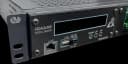
FCD6455-01
FIDAQUIRE FCD6455-01 Industrial Data Logger
Central logger running threshold-based ventilation logic
View product ←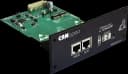
FBC0232-01
FBC0232-01 CANopen Input Card
CANopen card chaining sensors along the length of the garage
View product ←
FAC0420-02
3-Channel 4–20 mA Current Sensor
3-channel 4–20 mA input for the CO detectors
View product ←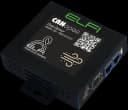
FMD1210-01
Ambient Dust Sensor
Garage ambient dust sensor
View product ←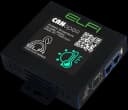
FTA3070-01
Temperature and Humidity Sensor
Garage temperature and humidity sensor
View product ←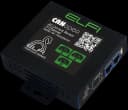
FAC2000-03
3-Channel AC Current Sensor
3-channel AC current sensor covering jet fans in groups
View product ←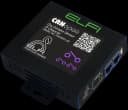
FDD0001-02
3-Channel Dry Contact Detector
3-channel dry-contact detector for overload and panel faults
View product ←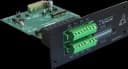
FDR0508-01
FDR0508-01 8-Channel Relay Output Card
8-channel relay card for staged control of exhaust and jet fans
View product ←Alarm and automation rules
- 1
CO above the first threshold: first ventilation stage on. Above the second: full ventilation and an alarm.
- 2
Concentration back below threshold for a set period: staged shutdown so fans do not idle.
- 3
One jet fan's current lost while commanded on: failure alarm naming the fan.
- 4
Humidity sustained above 70 %: extended ventilation to reduce corrosion.
- 5
Ventilation panel power loss: immediate alarm — the garage is left with no ventilation at all.
What the operator gets
Ventilation power drops once fans run on measured pollution instead of a timer.
The dead zone created by one failed jet fan is identified immediately.
The CO history is the compliance record for enclosed car-park safety requirements.
Frequently asked questions
Do you supply the CO detectors?
CO detectors come certified from a specialist supplier with a 4–20 mA output. Fidar's system reads, logs and turns that into ventilation commands and alarms. The split of roles is deliberate: a life-safety sensor should come from a certified maker.
Our garage has dozens of jet fans — does each need a current sensor?
Not necessarily. Fans are usually grouped with one current channel per group, and a 3-channel sensor covers three groups in one part. Where per-fan fault detection is a project requirement, each fan takes a channel and the CANopen card carries up to 64 sensors on one cable.
Related solutions
Want this solution on your own site?
Send us the site details and we will put together the equipment list and a technical proposal to match.