
Edge datacenter and ATM kiosk monitoring
Remotely monitors small equipment rooms, branch racks and ATM kiosks — sites with no operator on hand and the nearest technician hours away.
Why this monitoring is needed
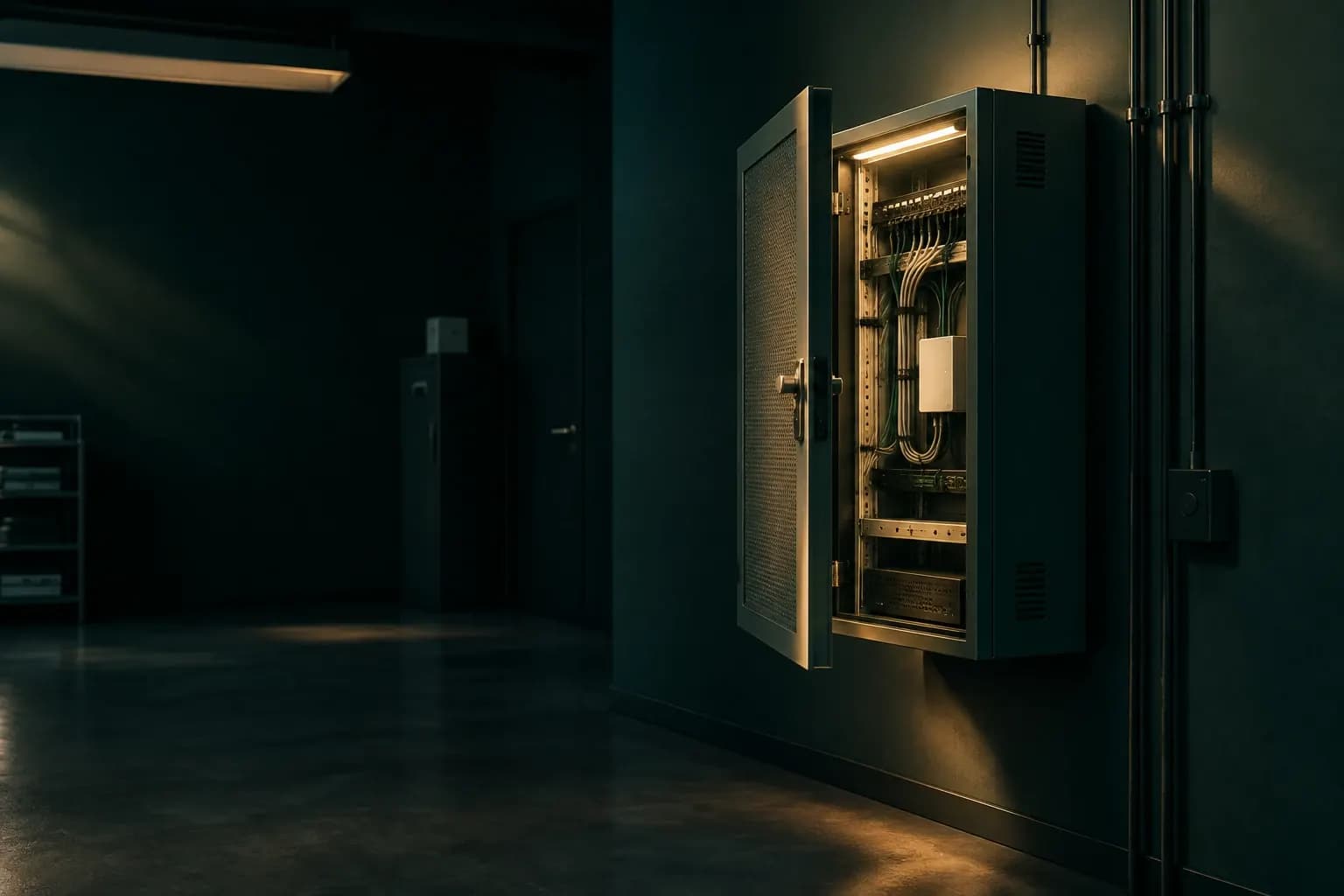
An edge site differs from a central data centre in one basic way: nobody is there. A rack in a bank branch, a roadside telecom cabinet or an ATM kiosk all hold sensitive equipment and none of them has a control room. Failures at these sites are discovered by a customer call, not by an alarm.
Rolling a technician to a remote site usually costs more than the outage itself. When you cannot tell whether the fault is power, cooling or the modem, you drive out once to diagnose and again to fix. Remote monitoring removes the first trip.
What gets measured
Cabinet internal temperature
Small cabinets hold little air and heat up within minutes in summer; continuous logging is the only way to see that steep slope.
Incoming power and battery state
Mains presence is read by an AC voltage detector and the backup battery by a 0–24 V DC voltage-level sensor.
Cabinet door opening
Every door opening is logged with a timestamp — for an ATM kiosk that is both a security event and an inspection record.
Impact and physical tampering
A shock sensor detects horizontal and vertical impact, so an attempt to move or break into the cabinet is reported at once.
Water ingress and humidity
Outdoor cabinets take water in the rain; sensing cable on the cabinet floor catches ingress before it reaches a board.
Recommended equipment
Every model below is from the Fidar Electronics range. The final combination is set after a site survey or an engineering consultation.
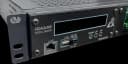
FCD6455-01
FIDAQUIRE FCD6455-01 Industrial Data Logger
Site logger with cloud monitoring that needs no static IP
View product ←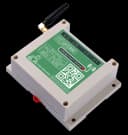
FWN0260-01
FWN0260-01 GSM Communication Modem (Dual SIM)
Dual-SIM GSM modem for a site with no fixed line, or one that should not depend on it
View product ←
FTA3070-01
Temperature and Humidity Sensor
Temperature and humidity sensor inside the cabinet
View product ←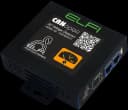
FDV0220-01
AC Voltage Detector
AC voltage detector for mains presence
View product ←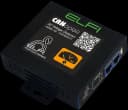
FAV0220-04
DC Voltage Level Sensor
0–24 V DC voltage-level sensor for the backup battery
View product ←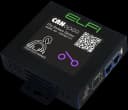
FDD0001-01
Dry Contact Detector
Dry-contact detector on the door micro-switch
View product ←
FDS0202-01
Shock Detection Sensor
Shock detection sensor for physical tampering
View product ←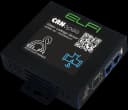
FDW0050-01
Water Leak Sensor
Water-leak sensor on the cabinet floor
View product ←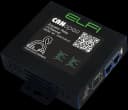
FDR0102-01
2-Channel Relay Module
2-channel relay module for remote power-cycling the modem or switch
View product ←Alarm and automation rules
- 1
Cabinet above 40 °C: immediate SMS — in a small volume the gap between warning and shutdown is short.
- 2
Mains loss combined with battery voltage below threshold: a two-stage alarm, so dispatch happens before the site goes dark.
- 3
Door opened outside the scheduled service window: security alarm.
- 4
Impact above threshold: timestamped event with simultaneous SMS and email.
- 5
Relay-driven modem power cycle after a prolonged link loss, clearing soft faults without a site visit.
What the operator gets
The diagnostic trip disappears — the technician travels once, with the right part.
ATM kiosk security events are documented with exact timestamps and stand up in follow-up.
One hardware pattern brings dozens of sites onto a single central dashboard.
Frequently asked questions
Our sites have no static IP — is central monitoring possible?
Yes. The FIDAQUIRE logger supports cloud monitoring without a static IP by opening the connection outward itself. Where there is no fixed line at all, the FWN0260-01 dual-SIM GSM modem carries both the data and the SMS.
How many sites can one team run?
The practical limit is false alarms, not site count. With well-set thresholds and two-stage alarms a small team covers dozens of sites; the failure mode is always the meaningless alert people learn to ignore.
Related solutions
Want this solution on your own site?
Send us the site details and we will put together the equipment list and a technical proposal to match.