
Server room alert system
A server room alert system for temperature, humidity, water leaks, power loss and open doors: SMS, email, relay and SNMP trap alerts over the network, with no separate software.
Why this monitoring is needed
A server room usually finds out about a problem once the damage is done. The air conditioner failed hours before a server shut down, or a leak started overnight and nobody saw it until morning. What is missing is rarely a sensor; it is a dependable path from the moment a value crosses a threshold to the moment a message reaches someone who can act, with no gap along the way.
A good alert has three properties: it reacts to the right things (not only air temperature but leaks, power, doors and filters), it reaches the right person (SMS for the urgent, email for the record), and it does not rely on a network that may have gone down at that very moment. A system with only one of these stays silent on the night it is needed.
What gets measured
Temperature and humidity
Each sensor gets its own thresholds, for the absolute value and for the difference from a defined value. A temperature difference shows a slowly failing air conditioner before it reaches the critical threshold.
Water leaks
Up to 50 m of sensing cable under the raised floor and along the air conditioner and pipework reports a leak the moment it touches water, before it reaches power cables and equipment.
Mains and UPS output
An AC voltage detector reports the presence or absence of mains, the UPS output and the air-conditioner circuit separately. Mains lost while the UPS is still holding is something an alert shows, rather than a phone call.
Door, fire panel and cooler alarm
A dry-contact detector turns any open/closed contact into an alert: a door micro-switch, a fire-panel output, or the air conditioner's own alarm relay. Equipment that already has an alarm contact does not need replacing.
Filters and dust
A dust sensor shows filter saturation and dust ingress, so the filter is changed before airflow drops and temperature climbs.
Recommended equipment
Every model below is from the Fidar Electronics range. The final combination is set after a site survey or an engineering consultation.
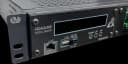
FCD6455-01
FIDAQUIRE FCD6455-01 Industrial Data Logger
FIDAQUIRE logger: per-sensor alert thresholds, SMS and email alerts, relay output, SNMP and history, with a built-in web monitoring panel
View product ←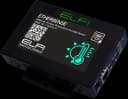
FTA3070-21
Networked Temperature and Humidity Sensor
Networked temperature and humidity sensor with its own IP; a start without a logger
View product ←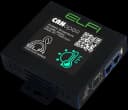
FTA3070-01
Temperature and Humidity Sensor
The same sensor on CANopen for covering several racks
View product ←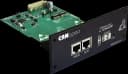
FBC0232-01
FBC0232-01 CANopen Input Card
The logger's CANopen card for daisy-chained sensors
View product ←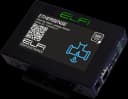
FDW0050-21
Networked Water Leak Sensor
Networked water-leak sensor with up to 50 m of sensing cable
View product ←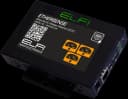
FAV0220-25
3-Channel Networked AC Voltage Detector
3-channel AC voltage detector for mains, UPS output and the air-conditioner circuit
View product ←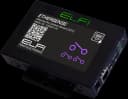
FDD0001-22
3-Channel Networked Dry Contact Detector
3-channel dry-contact detector for the door, the fire panel and the cooler alarm
View product ←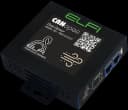
FMD1210-01
Ambient Dust Sensor
Dust sensor for filter saturation
View product ←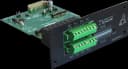
FDR0508-01
FDR0508-01 8-Channel Relay Output Card
8-channel relay card to start the standby cooler, an extraction fan or a siren
View product ←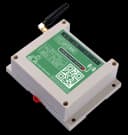
FWN0260-01
FWN0260-01 GSM Communication Modem (Dual SIM)
Dual-SIM GSM modem for an alert that does not depend on the site network
View product ←Alarm and automation rules
- 1
Each quantity has its own threshold, and an urgent alert is kept apart from a follow-up one: for example SMS for critical temperature and leaks, email for a filter or a trend that needs looking at.
- 2
Alerts go out over several paths at once — SMS, email, relay and SNMP trap — so that if one is unavailable the others still arrive.
- 3
The relay can take the action itself: start the standby cooler, run the extraction fan or sound the room's siren, before anyone arrives.
- 4
The GSM path does not depend on the site network, because the event that must be reported often takes the network down with it.
- 5
A sensor that has gone silent is reported as a fault, so it is never mistaken for one reporting a comfortable temperature.
- 6
If you already run a network monitoring system (PRTG, Zabbix, SolarWinds), the SNMP output delivers the same alert to it, so no new path needs building.
What the operator gets
A problem is announced when it starts, not when a server has shut down or the floor is wet.
The alert does not depend on a network that may be down.
The first response can be automatic: the standby cooler or extraction fan starts by relay without waiting for a person to arrive.
Every alert is recorded in the history and is available for later review.
Frequently asked questions
What does a server room alert system monitor?
At minimum temperature and humidity, and usually water leaks, mains and UPS output, door opening, the air conditioner's own alarm and the fire panel, and filter saturation. Each is a separate sensor or detector with its own threshold, and they all gather on one logger.
How does a temperature alert reach me?
By SMS and email, by relay to drive other equipment, and by SNMP trap, based on each sensor's threshold. For a path that does not depend on the site network, a dual-SIM GSM modem can be added.
Does alerting need separate software?
No. The FIDAQUIRE logger has a built-in web monitoring panel that opens in a browser on any computer on the local network, where thresholds, access levels and the dashboard are set. The networked sensor has its own web page too. If you run a network monitoring system, SNMP connects to it.
Is the alert system network-based or web-based?
Both: the sensors and the logger connect over the local network (Ethernet) and the monitoring panel opens in a browser. A small server room can start with just one networked sensor and grow to a logger and CANopen later.
Will the alert arrive if the network or power fails?
For a network failure, the GSM path through a dual-SIM modem is independent of the site network. For a power failure, the monitoring devices need a backup supply (for example on the UPS) and the alert path should be tested periodically; the exact run time depends on your configuration and cannot be quoted without it.
What can the relay do?
A relay output gives a command: start the standby cooler, an extraction fan or a siren. The 8-channel relay card installs on the logger and each channel is programmed with its own alert condition.
Related solutions
Want this solution on your own site?
Send us the site details and we will put together the equipment list and a technical proposal to match.