
Server room monitoring and control
Continuously measures temperature, humidity, water leaks, dust and incoming power in a server room, and raises the alarm before the racks go down.

Why this monitoring is needed
A server room is normally empty, and it fails quietly. An air conditioner that stops at two in the morning will push rack intake temperature past 45 °C by the start of business; processors throttle, disks drop out of the array one by one, and what you inherit in the morning is an outage rather than a warning.
The second hazard is water. Condensate lines, the riser from the floor above and the sprinkler main all sit over the equipment, and a leak stays invisible until it reaches the void floor. A leak sensor with up to 50 m of sensing cable buys the few minutes that separate a wet floor from a destroyed UPS.
What gets measured
Per-rack temperature and humidity
A temperature and humidity sensor at each rack's cold intake and hot exhaust shows the real airflow delta, not just an average room reading.
Water leak under the raised floor
The sensing cable runs along condensate pipes, under the racks and beside the UPS; contact with water anywhere along 50 m raises an immediate alarm.
Incoming mains and UPS output
AC voltage detectors report mains and UPS output separately, so the moment the load transfers to battery and the moment the battery runs out are both logged.
Rack electrical load
An AC current sensor with a CT on each rack feeder shows consumption creeping up long before it reaches the breaker's limit.
Airborne dust
Particulate is measured at 1, 2.5 and 10 microns; a sudden rise means a saturated air filter or a door that should have been shut.
Door opening and rack impact
A dry-contact detector wires into the door micro-switch, and a shock sensor logs knocks and physical tampering on the rack.
Recommended equipment
Every model below is from the Fidar Electronics range. The final combination is set after a site survey or an engineering consultation.
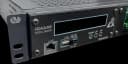
FCD6455-01
FIDAQUIRE FCD6455-01 Industrial Data Logger
Central data logger with its own web server, SNMP output and email/SMS alarms
View product ←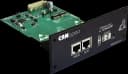
FBC0232-01
FBC0232-01 CANopen Input Card
CANopen card daisy-chaining up to 64 sensors on one cable
View product ←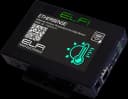
FTA3070-21
Networked Temperature and Humidity Sensor
Networked temperature and humidity sensor for racks where only a network port is available
View product ←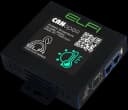
FTA3070-01
Temperature and Humidity Sensor
CANopen temperature and humidity sensor for multi-point room coverage
View product ←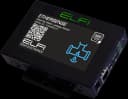
FDW0050-21
Networked Water Leak Sensor
Networked water-leak sensor with up to 50 m of sensing cable
View product ←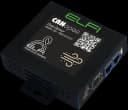
FMD1210-01
Ambient Dust Sensor
Dust sensor for filter saturation and dust ingress
View product ←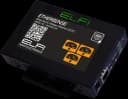
FAV0220-25
3-Channel Networked AC Voltage Detector
3-channel AC voltage detector for mains, UPS output and the AC circuit
View product ←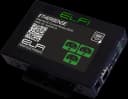
FAC2000-23
3-Channel Networked AC Current Sensor
3-channel AC current sensor for rack feeder load
View product ←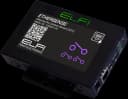
FDD0001-22
3-Channel Networked Dry Contact Detector
3-channel dry-contact detector for door, fire panel and AC alarm outputs
View product ←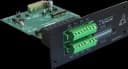
FDR0508-01
FDR0508-01 8-Channel Relay Output Card
8-channel relay card driving the standby AC unit, exhaust fan and siren
View product ←Alarm and automation rules
- 1
Rack intake above 27 °C: first-level email alarm. Above 32 °C: SMS to the on-call engineer and the standby AC unit switched on by relay.
- 2
Relative humidity outside 40–60 %: alarm. Below 30 % risks electrostatic discharge, above 70 % risks condensation on boards.
- 3
Any water contact on the sensing cable: immediate SMS and siren, with no delay and no averaging.
- 4
Mains loss: log the transfer to battery and start a timer; a second alarm fires once more than half the UPS autonomy has elapsed.
- 5
Door held open for more than 5 minutes: security alarm — an open door both raises the cooling load and defeats access control.
What the operator gets
Cooling failures are contained before they reach the temperature at which servers shut down.
A continuous temperature and humidity record becomes the audit evidence for data-centre compliance and equipment insurance.
Per-rack consumption trends drive capacity planning and keep feeders off their limits.
SNMP output appears directly in PRTG, Zabbix or SolarWinds — no separate dashboard to maintain.
Frequently asked questions
Does a small server room still need a data logger?
No. For a single-rack room the networked EtherSense sensors are enough on their own: each takes its own IP and web page, runs on PoE and speaks SNMP. A logger becomes worthwhile once the point count grows, or when you want one history and one alarm policy over everything.
If the site network or internet drops, is data lost?
No. The logger records locally and the history is complete once the link returns. To keep alerting during the outage, the FWN0260-01 GSM modem gives an independent path and sends the SMS over the mobile network.
At what rack height should sensors go?
The practical standard is three points per rack — bottom, middle and top of the cold intake. With a limited point budget, the top of the cold intake is the critical one: that is where the hottest intake air is.
Related solutions
Want this solution on your own site?
Send us the site details and we will put together the equipment list and a technical proposal to match.