
Solar plant monitoring
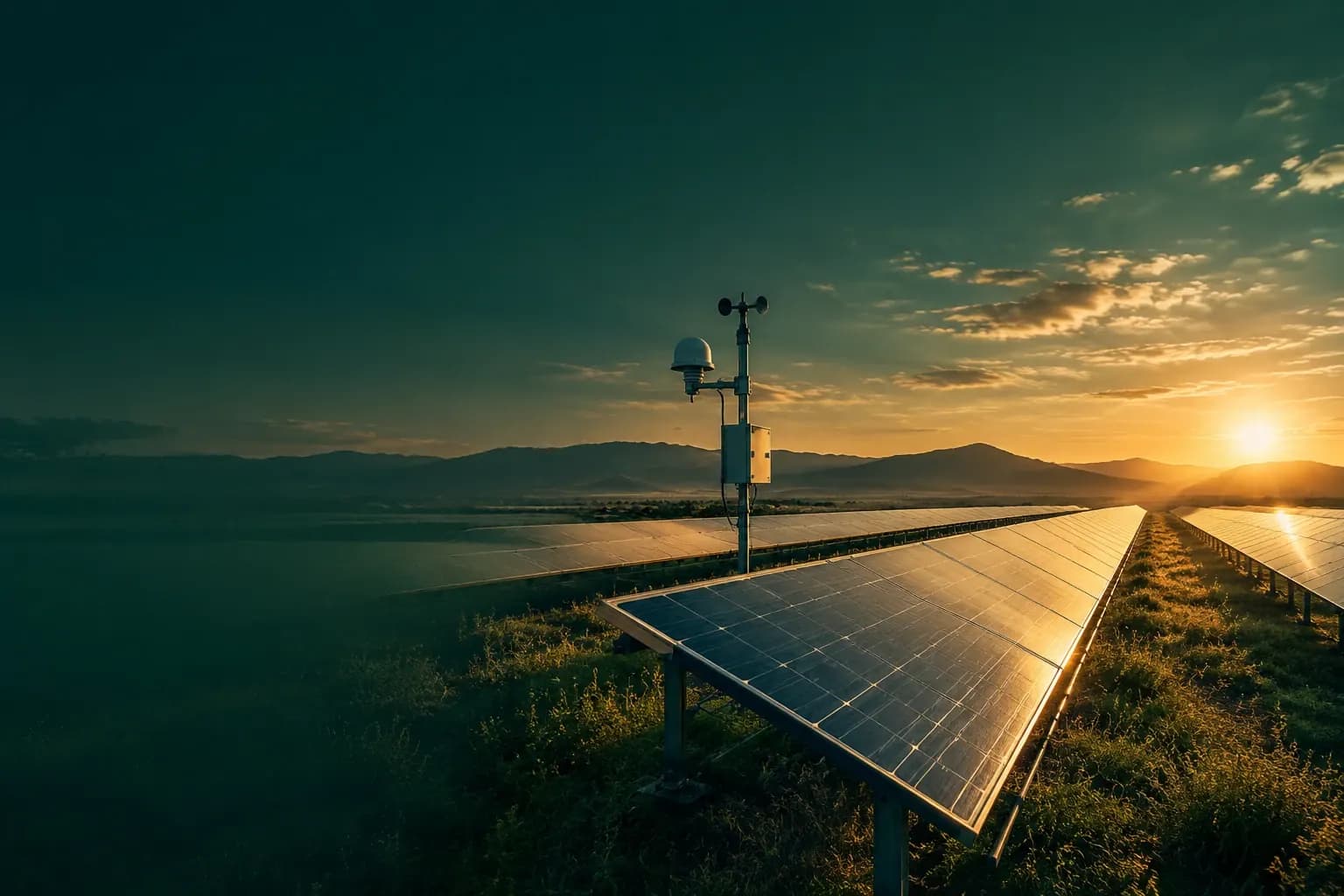
Measures string current and voltage, panel temperature and weather conditions, so a losing string is found before it eats into total output.
Why this monitoring is needed
A solar plant rarely fails outright; it degrades quietly. A disconnected string, an oxidised connector or one dusty row each takes a few percent off production and disappears into the inverter's headline number. Comparing strings against each other is the only way to see it.
Panel temperature matters too: cell efficiency drops as temperature rises, so a hot sunny day is not automatically a high-output day. Without logging irradiance, panel temperature and string current together, no judgement about "underperformance" is defensible.
What gets measured
Per-string current
A 3-channel DC current sensor sits on the strings; comparing strings under the same conditions names the faulty one immediately.
String and battery voltage
A DC voltage-level sensor for low-voltage strings and for the battery bank in off-grid systems.
Back-of-panel temperature
A PT100 bonded to the module's back sheet gives the basis for normalising output against temperature.
Irradiance and weather
A 4–20 mA pyranometer with ambient temperature, humidity and pressure sensors provides the reference production is judged against.
Dust on the panel surface
An ambient dust sensor logs dust episodes, so the wash schedule follows the data instead of the calendar.
Recommended equipment
Every model below is from the Fidar Electronics range. The final combination is set after a site survey or an engineering consultation.
FCD6455-01
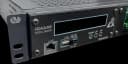
FIDAQUIRE FCD6455-01 Industrial Data Logger
Modular logger consolidating strings, inverter and weather station, and recording the site's weather record
View product ←
FAC2000-04
3-Channel DC Current Sensor
3-channel DC current sensor for string-to-string comparison
View product ←
FAV0220-04
DC Voltage Level Sensor
DC voltage-level sensor for string and battery bank
View product ←
FTR0100-01
PT100 Temperature Sensor
PT100 sensor for back-of-panel temperature
View product ←
FAC0420-02
3-Channel 4–20 mA Current Sensor
3-channel 4–20 mA input for the pyranometer and weather transmitters
View product ←
FMP0180-01
Ambient Pressure Sensor
Ambient pressure sensor for the weather record
View product ←
FMD1210-01
Ambient Dust Sensor
Dust sensor driving the panel-wash schedule
View product ←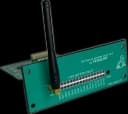
FWL1600-01
FWL1600-01 LoRa Wireless Card (16 Nodes)
LoRa card for points far from the control room with no cabling
View product ←Alarm and automation rules
- 1
One string's current deviating from the peer average beyond the allowed band: faulty-string alarm naming the string.
- 2
Output below expectation at a given irradiance, after temperature normalisation: performance-loss alarm.
- 3
Elevated dust sustained over several days: panel-wash recommendation.
- 4
Off-grid battery bank below threshold: alarm before the load drops.
- 5
Monthly production-versus-irradiance report as evidence for the O&M contract.
What the operator gets
A faulty string is found the same day rather than in next month's production figure.
The wash schedule follows real dust levels, removing unnecessary cost.
A performance claim against a contractor or manufacturer gains normalised data to stand on.
Frequently asked questions
How do you handle high-current strings?
Fidar's DC current sensor reads up to 5 A directly; above that, a shunt or transducer with a 4–20 mA output is used, which the system supports natively.
Will the system talk to our inverter?
The FIDAQUIRE logger supports Modbus/TCP and Modbus/RTU with no extra card, so any Modbus-capable inverter can be read directly. Independent string monitoring does not replace that — it complements it, because it sees what the inverter cannot.
Related solutions
Want this solution on your own site?
Send us the site details and we will put together the equipment list and a technical proposal to match.