
Cleanroom monitoring
Continuously records cleanroom temperature, humidity, differential pressure and particle counts, keeping the room's classification documented and auditable.
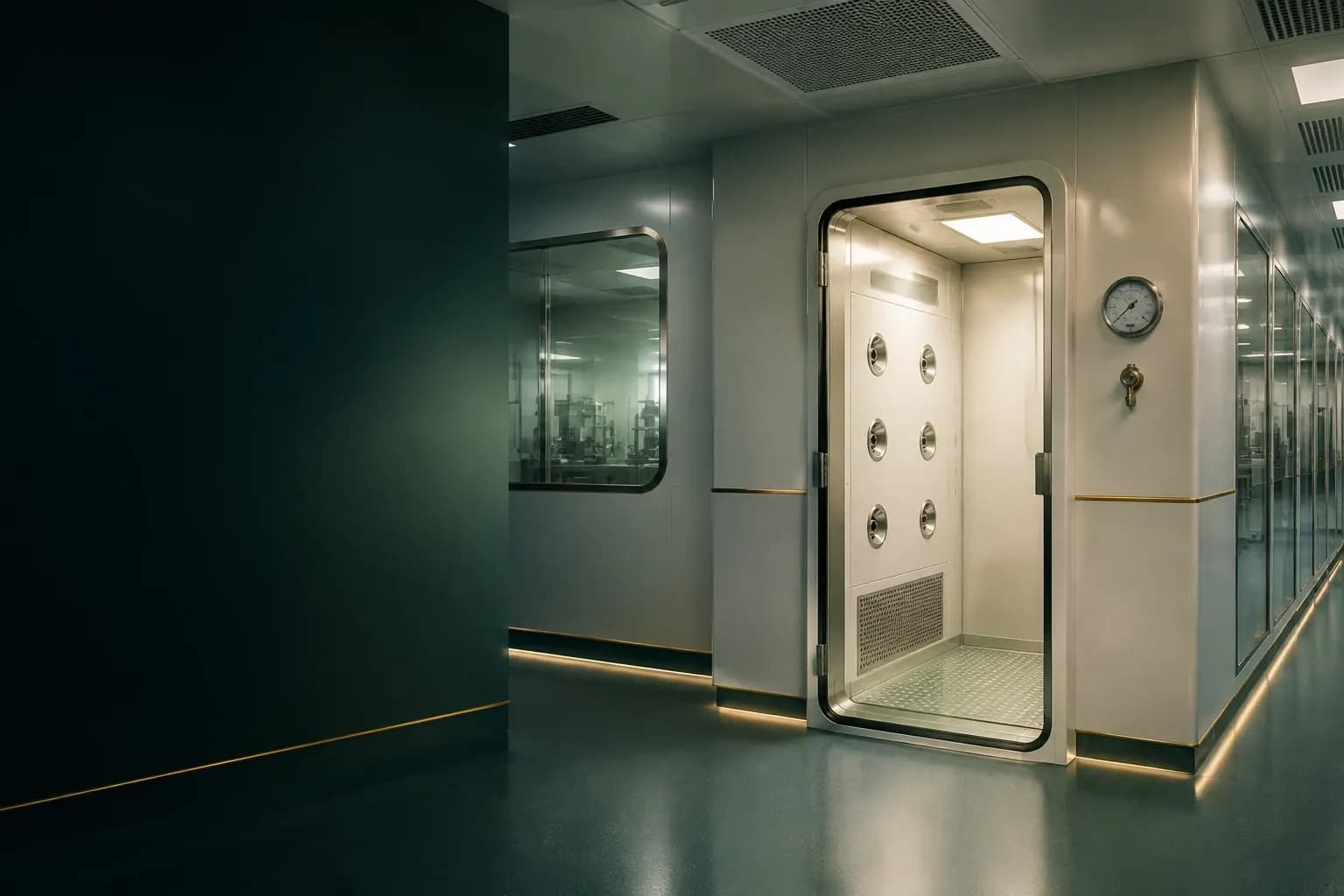
Why this monitoring is needed
A cleanroom is defined by one number: particles per unit volume. That number only means something if it has been held continuously. Half an hour of lost differential pressure on a night shift pulls corridor air into the room and breaks its classification — and if it was not recorded, nobody knows which batch was made in that half hour.
Auditing has its own demand. An auditor wants a continuous record, not three manual readings a month. A system that records and reports on its own is the difference between a pass and a non-conformance.
What gets measured
Room-to-room differential pressure
A 4–20 mA differential pressure transmitter between cleanroom, airlock and corridor.
Room temperature and humidity
Stability in both matters for the process and for an operator working in a cleanroom suit.
Airborne particle count
A dust sensor for continuous trending, alongside a calibrated particle counter for formal measurement.
AHU and HEPA filter operation
AHU motor current and filter differential identify the moment the HEPA is saturated.
Door and airlock status
Both airlock doors open at once is a direct contamination path and has to be logged and announced.
Recommended equipment
Every model below is from the Fidar Electronics range. The final combination is set after a site survey or an engineering consultation.
FCD6455-01
FIDAQUIRE FCD6455-01 Industrial Data Logger
Central logger with continuous reporting for audit
View product ←
FBC0232-01
FBC0232-01 CANopen Input Card
CANopen card chaining sensors across several rooms
View product ←
FAC0420-02
3-Channel 4–20 mA Current Sensor
3-channel 4–20 mA input for the differential pressure transmitters
View product ←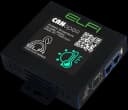
FTA3070-01
Temperature and Humidity Sensor
Cleanroom temperature and humidity sensor
View product ←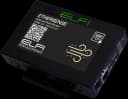
FMD1210-21
Networked Ambient Dust Sensor
Networked dust sensor for continuous particle trending
View product ←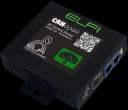
FAC2000-01
AC Current Sensor
AC current sensor for the AHU motor
View product ←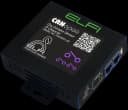
FDD0001-02
3-Channel Dry Contact Detector
3-channel dry-contact detector for the airlock doors
View product ←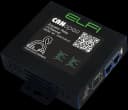
FDR0102-01
2-Channel Relay Module
Relay module for the siren and airlock electric lock
View product ←Alarm and automation rules
- 1
Differential pressure below threshold: immediate alarm — the room's classification breaks at that instant.
- 2
Temperature or humidity out of range beyond the permitted duration: deviation logged with its exact length for the batch file.
- 3
Both airlock doors open simultaneously: siren and logged event.
- 4
Filter differential creeping up: HEPA replacement flagged before airflow drops.
- 5
Automatic daily and monthly XLS reports for the audit file.
What the operator gets
Every deviation is timestamped and attributable to the batch it affected.
Audits are answered with a continuous record instead of scattered manual readings.
HEPA replacement follows differential pressure, removing the cost of changing filters early.
Frequently asked questions
Does your dust sensor replace a calibrated particle counter?
No. Formal classification is measured with a calibrated particle counter by the standard method. The dust sensor plays a different role: continuous trending, so that between two formal measurements any sudden change is seen and announced.
Is the data usable for GMP requirements?
Data is recorded continuously with exact timestamps and exports to XLS, CSV, JSON and XML, with user access levels set in the device panel. Full GMP compliance also involves organisational validation procedures beyond hardware, which belong in your validation plan.
Related solutions
Want this solution on your own site?
Send us the site details and we will put together the equipment list and a technical proposal to match.