
Industrial air quality monitoring
Measures particulate, temperature, humidity and pollutant gases inside production halls and at the plant boundary, producing a report fit for the environmental regulator.

Why this monitoring is needed
Industrial air quality monitoring serves two audiences with different demands: the environmental regulator, which wants a continuous defensible record, and the safety team, which wants to know what air the workforce breathed today. A monthly manual reading satisfies neither.
The important point is that pollution is usually local and episodic. One workstation on one shift produces a concentration that disappears in the hall average. Multi-point monitoring names the point and the hour.
What gets measured
PM1, PM2.5 and PM10 particulate
The three particle sizes are reported separately; their ratio hints at the source.
Pollutant gases
A 4–20 mA CO, NOx or VOC detector is selected to match the plant's process.
Hall temperature and humidity
Both set worker comfort and influence how pollutants disperse.
Ventilation and dust-collector operation
Fan motor current and dust-collector differential prove the pollution-control system is actually working.
Boundary weather conditions
Ambient temperature, humidity and pressure record the dispersion conditions that the data must be read against.
Recommended equipment
Every model below is from the Fidar Electronics range. The final combination is set after a site survey or an engineering consultation.
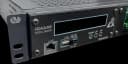
FCD6455-01
FIDAQUIRE FCD6455-01 Industrial Data Logger
Modular logger covering production halls and the plant boundary together
View product ←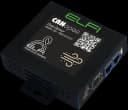
FMD1210-01
Ambient Dust Sensor
Dust sensor for points inside the hall
View product ←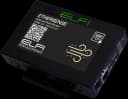
FMD1210-21
Networked Ambient Dust Sensor
Networked dust sensor for points that only have a network drop
View product ←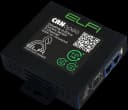
FAC0420-02
3-Channel 4–20 mA Current Sensor
3-channel 4–20 mA input for the gas detectors
View product ←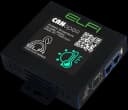
FTA3070-01
Temperature and Humidity Sensor
Hall temperature and humidity sensor
View product ←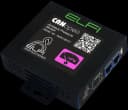
FMP0180-01
Ambient Pressure Sensor
Ambient pressure sensor for the weather record
View product ←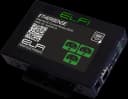
FAC2000-23
3-Channel Networked AC Current Sensor
3-channel AC current sensor for ventilation fans and the dust collector
View product ←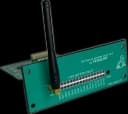
FWL1600-01
FWL1600-01 LoRa Wireless Card (16 Nodes)
LoRa card for boundary stations far from the control room
View product ←Alarm and automation rules
- 1
Particulate above the occupational limit at one point: safety alarm naming the point and the shift.
- 2
Pollutant gas above threshold: ventilation increased by relay and the event logged.
- 3
Dust-collector fan current lost while the line is producing: immediate high-priority alarm.
- 4
Dust-collector differential above threshold: bag or filter replacement flagged.
- 5
Automatic daily and monthly reports in a format suitable for the regulator.
What the operator gets
A continuous record replaces scattered manual readings.
Pollution is attributed to a specific point and shift, making targeted correction possible.
A dust-collector failure is announced as it happens rather than at the next inspection.
Frequently asked questions
Do you supply the gas detectors?
Gas detectors are selected for the target gas and environment and come from a certified maker. Fidar's system reads their standard 4–20 mA or 0–10 V output, logs it, and turns it into alarms and ventilation commands.
Can data be sent to the regulator's online monitoring system?
The FCD6455-01 logger provides Modbus, SNMP and XLS, CSV, JSON and XML files, and those outputs are what the online monitoring submission is built on. The exact submission format is aligned with the regulator on each project.
Related solutions
Want this solution on your own site?
Send us the site details and we will put together the equipment list and a technical proposal to match.